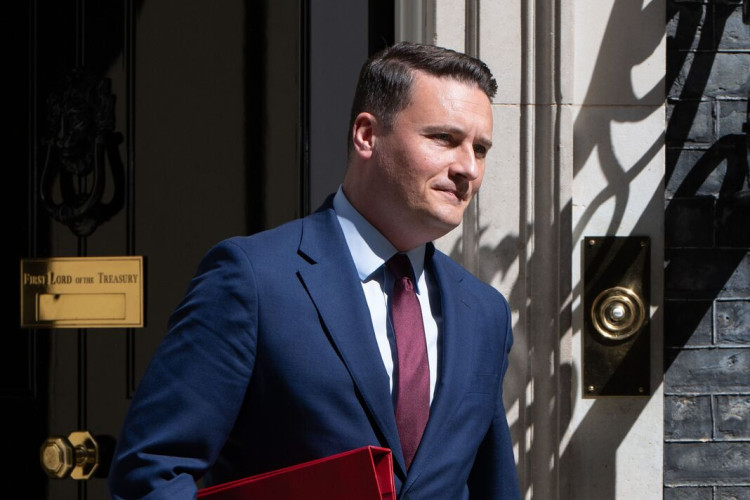
Just forty minutes after the Government published one of the biggest NHS reform bills in years, the Health Secretary resigned.
That timing matters.
Because this was already going to be politically difficult. Now it enters Parliament in the middle of a leadership crisis, with the political authority behind it visibly starting to fracture.
The Bill itself is a major redistribution of power inside the health system. And despite the Government’s rhetoric around neighbourhood health, local integration and devolved decision-making, much of it points in the opposite direction: towards greater central control.
That contradiction now sits at the heart of the politics around it.
The 10-Year Health Plan repeatedly frames reform around neighbourhood health, shifting care closer to communities, empowering patients and giving local systems greater control.
Yet even the Bill’s headline reforms – abolishing NHS England and creating a Single Patient Record – point towards a much more top-down model of control. And that trend runs through the Bill much more widely.
Ministers gain broad powers over ICB direction, operational intervention, commissioning oversight and NHS data infrastructure. The Bill also contains 161 delegated powers, meaning many of the most important decisions will come later through regulations and guidance rather than on the face of the legislation itself.
And that is exactly why this already has the feel of a classic NHS “Christmas tree bill”. Once legislation starts redistributing power, accountability and control across the NHS, almost every wider anxiety about the future direction of the health service gets hung onto it during its passage through Parliament.
For lobbyists, charities, campaign groups and anyone with a policy priority they want attached to NHS reform, this presents a major legislative opportunity. Stakeholders across health, tech, life sciences, patient advocacy and beyond will all see the Bill as a rare parliamentary vehicle through which to advance issues they have often struggled to gain traction on elsewhere.
The Single Patient Record is a good example of this. In principle, joined-up patient records are difficult to oppose. Few would disagree that the current system is fragmented, inefficient and, as a result, at times unsafe.
But because the Bill leaves so much of the operational detail to future regulation, it also opens the door to much wider arguments about privacy, consent, commercial access, AI, interoperability and the future role of consumer health technology. All of those are areas where stakeholders are now likely to push for additional safeguards, amendments and influence as the Bill progresses.
And that is where NHS reform so often becomes politically difficult. The further this legislation progresses, the harder it is likely to become for ministers to contain it as a straightforward NHS reform bill rather than a proxy for much broader debates about technology, accountability, data and the future role of the state.
Having worked on the Lansley reforms myself – reforms once memorably described by critics as “a monster with lipstick”, though I’d personally question the lipstick - some of the warning signs feel familiar. Not because this is “Lansley 2.0” (it most definitely isn’t), but because the same political pattern risks emerging: namely, ministers underestimating how quickly complexity and structural change can take on a political life of their own.
As Stephen Dorrell later reflected to Nicholas Timmins about the experience, “legislation should be an accurately targeted rifle shot, not a strategic bombing.”
That is the risk here.
Because this Bill is trying to do several very large things at once: abolish NHS England, redesign accountability structures, reshape NHS data architecture, reform provider governance, expand ministerial powers and create the framework for a more consumer-facing digital NHS.
And unlike previous NHS reform bills, all of this is now unfolding against an unusually unstable political backdrop.
Just 40 minutes after the Health Bill was published, Wes Streeting resigned from Government, explicitly citing a loss of confidence in the Prime Minister’s leadership and arguing that Labour will not fight the next election under Keir Starmer.
That leaves one of the biggest NHS reform bills in years entering Parliament at precisely the moment the political authority needed to drive it through is visibly starting to fracture.
Large-scale NHS reform consumes enormous political capital even under stable governments. Under conditions of open leadership instability, broad and controversial “Christmas tree bills” become dramatically harder to control. Parliamentary opposition, stakeholder pressure and internal party management problems all start building at the same time.
The result is that the Bill’s first phase of scrutiny is likely to be shaped as much by questions of political authority and Labour stability as by the technical detail of NHS reform itself.
None of this means reform is unnecessary. The NHS clearly does need simplification, interoperability and better digital infrastructure.
But the Health Bill now risks becoming a vehicle for much bigger arguments about the future shape of the NHS, the role of the state and the future direction of the Government itself.
And with the resignation of the Health Secretary who brought it forward, the question is no longer simply whether the Bill is controversial. It is whether the political authority required to deliver reform on this scale still exists at all. Because once NHS reform becomes a wider argument about power, control and accountability, it rarely stays contained for long.
katedarkins-1.jpg)