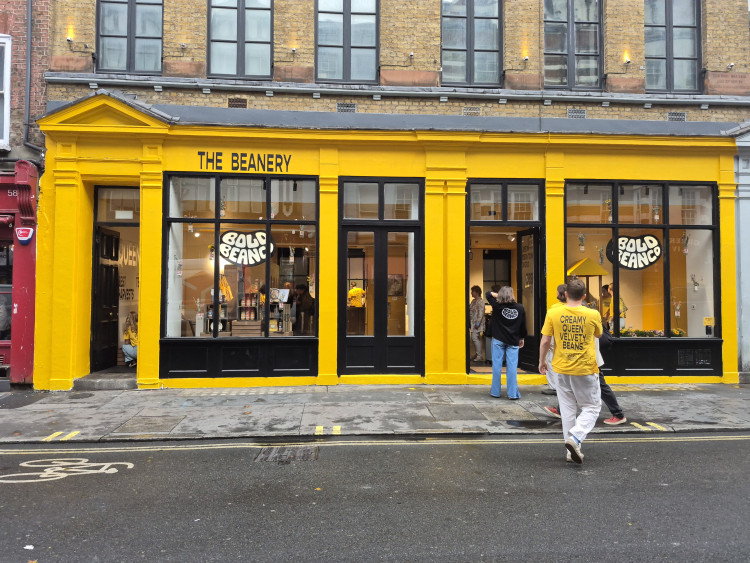
Casey Kelly-Weekes is a Junior National Account Manager at Bold Bean Co. where she looks after foodservice, out-of-home and wholesale. Her role spans commercial, supply and partnership activity as the brand continues to expand its presence in foodservice.
Bold Bean Co. is making its mark in foodservice, bringing premium beans to menus, salad bars and operator partnerships. Casey Kelly-Weekes speaks to Jennifer Cirillo, Head of Trade at Hanover Communications, about the trends driving the category, the importance of creating a quality marker and why foodservice is an increasingly powerful route to trial.
JC: Bold Bean Co. has seen strong momentum in foodservice. What is driving that growth?
It’s an exciting time to be in foodservice. We’ve hit the industry at the right time when beans are having a really good PR moment with the government’s push for people to eat more beans, which has helped.
People are much more health and quality conscious. We have seen an industry wide rise in interest from consumers who are particularly mindful of where they are getting their fibre and protein from. We are seeing people looking for meals that feel fresh and exciting but also help them hit those goals, and beans are an easy way to do that. Beans are nutrient-dense, so you don’t need to eat loads of them to get those benefits, which is also interesting when you look at the wider conversation around GLP-1s and people eating differently.
For us, that translates particularly well at lunch. Our biggest foodservice customers at the moment are salad bars, so we are very much resonating with that health-conscious foodie. People can spend a bit less, still feel like they are hitting their goals and have a nice salad that fills them up.
Moving into the warmer months, we are keen to build on our momentum as consumer habits and the seasons change.
JC: Can foodservice help a challenger brand build awareness beyond the restaurant?
Yes, it can. When we work with a restaurant partner it is often a brand partnership as well as a product partnership. We work with their social team and shout about the fact that Bold Bean is on the menu, which gives customers another reason to try the dish. With one of our most recent partnerships, the foodservice tins are displayed around the restaurant. Even in our foodservice format, the tins are branded in the same way as our jars, which helps people recognise them, want to try it and know what they are eating. Our team has worked really hard on getting our jars and tins to look just right. The product looks great on the shelf or stacked up in a quick service restaurant.
There is an interesting difference between retail and foodservice. A younger consumer might choose to spend a little more on lunch but a little less on their food shop. Foodservice gives them a chance to try a product in a setting where they are willing to trade up, then hopefully go on to buy it for themselves.
JC: How important is it for foodservice suppliers to adapt their format to the realities of different kitchens?
Really important! We take a two-pronged approach. If you are trying to work with a niche kitchen, whether that is on a cruise ship or in a very small restaurant, storage and recycling facilities can be limited. Tins take up a lot of space and, because they are heavy-duty, you can’t just squash them down once they are empty.
It is also about the amount of product an operator needs. You can’t have a 10kg tin, but you can have larger pouches that offer more flexibility. At the other end of the scale, a smaller restaurant may want something resealable, because once you open a tin, you have to use it.
At the moment, we have 2.5kg tins in foodservice. This format also allows us to be in professional kitchens, but we are constantly working on developing different formats to make our products as accessible as possible. The challenge is keeping the quality the same as our existing products, while making the format feasible to produce. We are trying to work out how flexible we can be, while making sure we don’t compromise on the quality of the product.
JC: When does a branded ingredient earn its place on a menu?
The vision is for Bold Bean to be a quality marker that chefs want to shout about, in the same way that you might see Isle of Wight tomatoes on a menu. We are lucky because we are not just selling the brand: the product is different to a tin of chickpeas that costs half the price and people can taste the difference.
We are still at a relatively early stage of building the brand, so it is really important that the operators we partner with are the right fit and have the same values as Bold Bean.
If our logo is going on a food-to-go product or a café dish, for example, we need to quality-check the whole meal. We don’t want someone trying Bold Bean for the first time to get a mix of our chickpeas and another product that isn’t of the same quality.
JC: What role can suppliers play in helping operators develop more compelling menus?
Menu development and getting people excited about what to do with our product is a huge part of the business. We work with our recipe developer to show distributors and chefs how beans can be used in a way that makes them the centre of the plate, rather than just an ingredient that fills out a dish.
There is still that stigma around beans being a filler ingredient, but there are so many more interesting ways to use them. We send samples out with chef-curated recipe cards, so there is inspiration behind the product from the start.
If you are paying more for our beans, you need to create a recipe that makes that work. That might mean an operator can use less meat, or less oil in a hummus because our beans are already creamier. It is about navigating that balance between making the recipe exciting and delicious, and making it commercially viable.
JC: What have you learned about using experiences to build foodservice momentum?
It is all in creating the different touchpoints across the business to give great experiences that contribute to our awareness. We have not had a Bold Bean stand at a food festival yet, although it is something we would love to explore as we grow! We have created some really amazing experiences though. For example, we did a pop-up at Paddington Station for people coming back from Glastonbury, giving out our baked beans with sourdough and butter as a ‘here is your dinner for when you get back home’ moment.
We wanted to get our product to people at exactly the right time, when they were coming home from a festival and probably did not want to think about dinner. We had big Bold Bean branding as people came out of the station, and the immediate reaction was really cool to see and the social content generated was impactful.
We will be executing our first pop up in London this month as well, which we are incredibly excited about.
JC: How are younger consumers shaping the way you think about foodservice partnerships?
Our customer base is expanding to a younger audience, particularly among university-age consumers and those in their early twenties. Our supermarket shoppers are generally a little older, which makes sense as we are a premium food product, but the foodservice audience is younger.
A big part of that is due to social media and the food influencers we work with. People such as Emily English, the nutritionist, make easy meals using our beans, and that makes it feel like a trendy product to buy. The fact that Bold Bean is a visually distinctive product helps too: it is an ingredient people want to share and be seen with. They look exciting, especially compared with a standard tin of beans. When we are looking at foodservice partners, we think carefully about who is going there and who is seeing our product. Premium salad bars fit naturally with the ‘what I eat in a day’ content and the idea of romanticising the corporate lunch.
JC: In foodservice, there is a growing need to balance the demand for health with demand for indulgence. What menu solutions are you offering operators so that they can respond to both?
Beans are generally seen as healthy, so we do not always have to tell people that they are packed with fibre and protein. We do shout about those benefits from time to time, but our recipes are not usually framed as ‘this will get you your 30 grams in’.
Beans already have that healthy reputation, which gives us the freedom to create dishes that feel like a treat as well. Our marketing team is very good at finding that balance. Our January campaign, for example, was centred around the idea of comfort.
The same applies to how we talk about different diets. Our products are vegan, but we would not necessarily say, ‘this is a vegan meal’. Our cookbook includes vegan, vegetarian and meat-eater recipes because we want there to be something for everybody.
A salad can still include halloumi and butter beans. A black bean brownie can be a really delicious treat. It is not about being completely clean all the time. It is about showing how the product can work across different types of dishes and occasions, whether someone is looking for something healthy, something indulgent or a bit of both.
To discuss the challenges facing your business and how specialist PR support can help, contact the Trade team, at [email protected] or view our page at FMCG & Retail PR.
