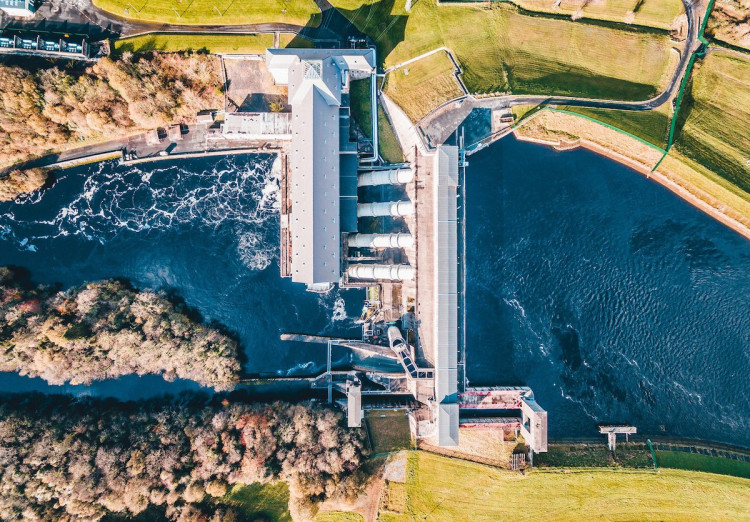
Against the backdrop of the historic turbine hall at Ardnacrusha Power Station in County Clare in early July, the Irish government set out the energy priorities for its EU Presidency, which reflect not only the European agenda and Europe’s wider ambition, but also Ireland’s own domestic energy objectives.
A high-level event that brought together senior officials across various government departments and senior management from some of Ireland’s key players in the energy sector, holding the event so early in Ireland’s Presidency of the Council of the EU was a clear signal of the government’s commitment to advancing the energy agenda during its Presidency term. While the momentum had started the previous day with the official EU Presidency launch in Dublin Castle, day two proved equally charged as the first thematic event put energy firmly in focus.
Situated in the centre of Ireland’s first hydroelectric power station, Minister Darragh O’Brien opened the event, Electrifying Ireland, by highlighting Ireland’s energy achievements so far and the ambitions for the future - even framing the EV Scrappage Scheme, which had opened the previous day and proved so popular it closed within an hour, as a key achievement. A senior official joked that even Taylor Swift tickets didn’t move so quickly, however it could be argued that Taylor’s promoters may have estimated the demand more accurately.
Across the panel discussions, the breadth of Ireland’s energy transition came into focus – from the demands on grid capacity and the decarbonisation of industry to the electrification of transport fleets. While each conversation drew on expertise from different corners of the energy sector, they were united by a single, essential consideration: people. Behind every policy, infrastructure project and technological innovation are the lives they are designed to improve - from the grandparents keeping their homes warm, to families looking for affordable energy bills and businesses seeking reliable power to grow. Energy equity emerged as a central theme throughout the event, with every contributor emphasising the importance of ensuring that both the benefits and the costs of the energy transition are shared fairly. Whether viewed through an international, community or industrial lens, speakers stressed the need for energy to be affordable, reliable and accessible to all.
There was also a candid recognition that Ireland has yet to fully shape the national conversation on the green transition that brings everyone with it. One panellist noted that, if people are to get behind the energy transition, it must make sense in the context of their everyday lives. This was echoed by another contributor, who stressed that policy decisions must remain focused on the outcomes for people.
While there was strong consensus on the importance of bringing people along on the energy transition, much of the discussion focused on the need to do so rather than on the practical steps required to make it happen. There were important references to community engagement, support for businesses and ensuring people can see the benefits in their everyday lives, but the question of how to turn that ambition into meaningful, measurable progress will be key if we expect to garner the public support that is needed to fully embark on this journey. This challenge is evident in the EU also, for example with many critics outlining that the EU will need to ensure that vulnerable households are not negatively affected by the introduction of the EU Emissions Trading System (ETS2).
There are already successful examples of garnering support here in Ireland. During the last election campaign, in an area where green politics had not traditionally found strong support, one government intervention appeared to cut through: improved access to home retrofitting. For some households, particularly those who had felt isolated from or left behind by the energy transition, retrofitting made the benefits tangible for the first time. It was no longer an abstract national objective, but something material in warmer homes, lower bills and better everyday lives.
That idea felt especially resonant within the walls of Ardnacrusha. Nearly a century ago, the Shannon Scheme was not only a bold engineering project, but a national exercise in public buy-in. When the first sod was turned on 13 August 1925, it opened the door to Ireland’s energy future, at a time when just one in 40 homes had electricity and the project represented a visionary commitment to the country’s development. With around 20% of the newly-formed State’s GDP spent on the project, the development of Ardnacrusha demonstrated the scale of ambition and political courage needed to deliver transformative energy infrastructure – a benchmark that remains relevant as we pursue today’s energy objectives.
What was central to that vision and ambition was ensuring that people were brought along on the journey. By 1928, a dedicated public relations department had been established within the ESB to build understanding of the Shannon Scheme and the support for electrification. Through newspaper advertisements, public tours, exhibitions and showrooms in small communities and targeted engagement with groups such as the Irish Countrywomen’s Association, the transformative power of electricity was translated in a way that made sense to people and their lives.
Almost 100 years later, the challenge feels strikingly similar. While Ireland’s decarbonisation goals can feel difficult to reach at times, standing in Ardnacrusha offers a powerful reminder of what ambition, teamwork, national drive and consensus can achieve.
While Ireland’s EU Presidency will focus on advancing progress at a European level, achieving our energy ambitions will also require strong domestic momentum. In that regard, there is no better example to look at than Ardnacrusha. Instead of reinventing the wheel, perhaps we can take inspiration from a courageous and inclusive project which transformed lives by bringing people along on the journey.