Burnham’s blockbuster puts Labour on the front foot – at least until the Budget.
The buzz around the bars and restaurants flanking Liverpool’s Albert Dock last night told you one thing: the Labour Party is back at the top of its game after two years of drift under Keir Starmer’s premiership.
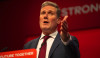
Delegates, MPs, ministers and advisers spoke with one voice – Andy Burnham’s barnstorming and emotion-charged speech, delivered with an energy not seen since the young Tony Blair, had mapped out one of the most ambitious political programmes of change in the last half century.
Ending the triple lock for pensioners, upending the ‘first-past-the-post’ voting system, even opening the door to rejoining the EU – the Prime Minister answered those who feared his administration would only see incremental change at best.
The questions that remain to be answered are what will be the reaction be from business and is the electorate convinced?
The conference sent mixed signals to business: many leaders welcomed moves to begin the great Brexit reversal, but many will equally have concerns about the Prime Minister’s plans for widespread public control of key economic sectors.
Sipping a pint of ‘10 North’, a rebranded medium-strength lager served in the conference centre, a government adviser said: “If Andy achieves a decent chunk of what he says he will, he will deserve to take his place among the great reforming prime ministers alongside Blair and Thatcher.”
Ironically, some of the loudest applause for Burnham’s speech was for a passage eviscerating Thatcher’s privatisations, and his denunciation of the last 40 years of UK politics, effectively repudiating many achievements of the Blair/Brown governments in which he himself served.
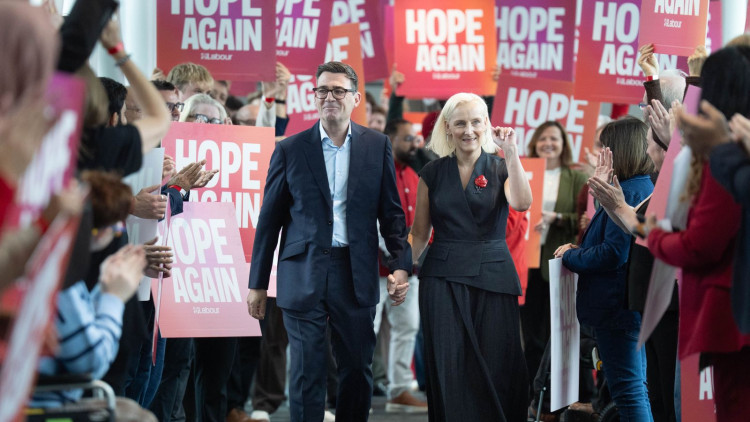
Arguments such as these were lost in the immediate aftermath of the speech, as delegates drank outside on a mild autumn evening while screens everywhere proclaimed: “Hope Again”
The following morning, however, Burnham found himself pressed in a round of broadcast interviews on delivery: how soon will these profound changes happen, and how will they be paid for?
Businesses will also – like a great many ordinary voters – be worried about the prospect of higher taxes to pay for all this. The Prime Minister admitted ending the triple lock would not in itself be enough to fund the full costs of his planned flagship National Care Services.
Investors and entrepreneurs worry about possible plans to equalise capital gains tax rates with those of income tax, something many claim would place too heavy a burden on a sluggishly recovering economy.
Do not expect much of a clue to emerge from the Budget in a month’s time. A government insider said John Healey, the Chancellor, looked set to shy away from fleshing out Burnham’s ambitious programme with detailed fiscal changes.
October 28 would not be the sort of Budget that Ed Miliband, one of Healey’s rivals for the Treasury hotseat, would be delivering, the insider added.
The Prime Minister set out what looked very like an election prospectus which put his opponents on the back foot: if the Tories kept the triple lock, what would they cut to offset the cost? Similarly, his pledge to promote electoral reform can be seen as an attempt to woo Liberal Democrat voters.
The only trouble is that he appears to have ruled out a general election before 2029, giving the other parties plenty of time to set out their own stalls and go on the attack.
For Labour activists leaving Liverpool, however, it was enough to hope now, even if we all have to pay later.
katedarkins-7.jpg)