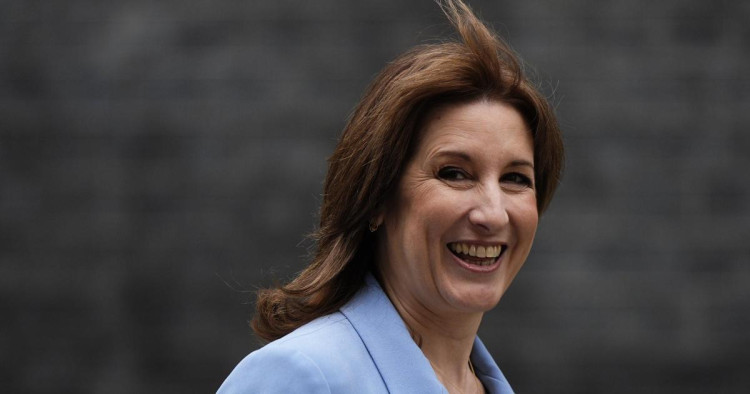
To say Rachel Reeves had a tricky backdrop for what had been billed as a low-key, steady-as-she-goes Spring Statement today would be an understatement.
War in the Middle East threatens a series of shocks and disruptions to her carefully crafted political economic narrative – that things are gradually getting better, with Britain on the right track under Labour.
And last week’s by-election defeat at the hands of the insurgent Green Party brutally exposed Labour’s vulnerability to a populist attack from its left flank, as well the existing threat from Reform UK to its right.
As she got to her feet to reveal the Office for Budget Responsibility’s latest forecasts – set in stone before hostilities in the Gulf broke out – bond markets and energy prices were heading sharply in the wrong direction.
The Chancellor got the worst news out of the way early on by revealing that the OBR had cut its growth forecast for this year – down from 1.4 per cent to just 1.1 per cent. Growth predictions for following years were up, but progress towards the end of the decade still looks anaemic.
The average person would be £1,000 better off in 2029 than they were at the time of the 2024 general election, Reeves insisted, to Opposition jeers. Unemployment is now forecast to hit 1.9million this year, and overall taxes are set to be 38 per cent of Gross Domestic Product in 2030-31. The small print also revealed that government policy decisions had added £5.7billion to total borrowing, much of it from higher spending on special educational needs required to account for historic deficits. The behavioural response to recent tax changes, including to inherited pension pots, are described as particularly uncertain, adding further risk to future forecasts. And the OBR sent out a fresh warning about the potential effect on business of the government’s flagship Employment Rights Act, saying it was still unable to include an assessment of its potential economic impact.
As expected, there were no new major policy announcements, although the Chancellor pointed the way for more ‘reforms’ aimed at helping young people trapped by jobs shortages and high student debt and promised to harness AI for the general economic good.
Politically, she took the fight to Reform by branding Nigel Farage’s party (whose leader was not in the Commons to hear the statement) a ‘Tory tribute act’. “They may have changed the colour of their rosettes but they are exactly the same people,” she claimed.
GREEN NEW ZEAL
There was what many believed to be the first swipe at the Greens in any major fiscal statement, with Zack Polanski’s party four points ahead of Labour in one opinion poll out today. The Greens would take Britain out of NATO, the Chancellor said – and an attack on parties which fell prey to ‘the temptations of easy answers and reckless borrowing’ appeared to be directed firmly to the left. Reeves attacked the three evils of austerity, Brexit and the self-destructive economics of Liz Truss’s mini-Budget – with the second of these the most striking in signalling the changed priorities of Keir Starmer’s government.
After years of senior Labour figures appearing scared even of mentioning the B-word, today the Chancellor effectively claimed Brexit was a deeply regrettable mistake which had ‘cut us off from our closest trading partners.’ “They backed Brexit – wrong!” she thundered at Tories.
The first signs of a new electoral strategy, designed to reassert Labour’s position as the natural home of the progressive voter and to see off the Green threat, came tantalisingly into view.
Ultimately Reeves’s political future still appears inextricably linked to that of Keir Starmer – who is safe from any immediate leadership challenge, particularly at a time of war, but who is still hit by deep unpopularity among voters. She made a decent fist of a difficult Spring Statement, defending Labour’s agenda of bringing order to the public finances and asserting Labour had made the right decisions, and had the right plan for the future.
But, just after she spoke, the OBR added a message of uncertainty to the many others littered across its economic forecast: that an escalating conflict in the Middle East could have a ‘very significant impact’ on the UK economy.
Labour’s new political strategy will be tested quickly in crucial elections across the country on 7 May. Today’s statement has done little to guard against its turbulent future.
katedarkins-7.jpg)